Scotland Preparation
Getting ready to go to Scotland
After my trip to the Balkans it didn’t take too long until I wanted to do it again. For that I needed two things; someone to go with and a place to go. It wasn’t too hard to find someone to go with. I met him at a Shabbat meal, and we shared stories of our travels. They were similar enough, so he decided to join. As for where to go, he has family in London who he wanted to visit, and if I can get a place to stay in London, I’m not going to let that pass. However, I was already in London before, so I wasn’t so excited to explore it again. Obviously, my one day in London was not nearly enough to see all that there was to see there. Nor is London all of England. But still, I wanted something more exotic. So Scotland was chosen. Another major reason for Scotland was The Fringe.
Fringe
Edinburgh holds the Fringe Festival every year on August. During that month all of the Edinburgh bars (of which there are many) host aspiring performance artists. The vast majority of them work by offering free entrance and at the end, paying a tip of about 10 GBP depending on how much you enjoyed it. There are a few more well known, and better produced ones, that operated in theaters and charge an entrance fee. But even those, charge a reasonable amount.
I recall going to the food truck festival in Jerusalem and being very disappointed by it. It was very heavily top down run, with a very limit supply of vendors, all offering similar things. They even provided a single app that they required everyone to use in order to order food. Fringe, on the other hand, has many street performers, and bars can rent out their place to whoever they see fit. So I had high hopes for the Fringe Festival.
Kilt
I like to get traditional clothing as a souvenir from every place that I visit.
-
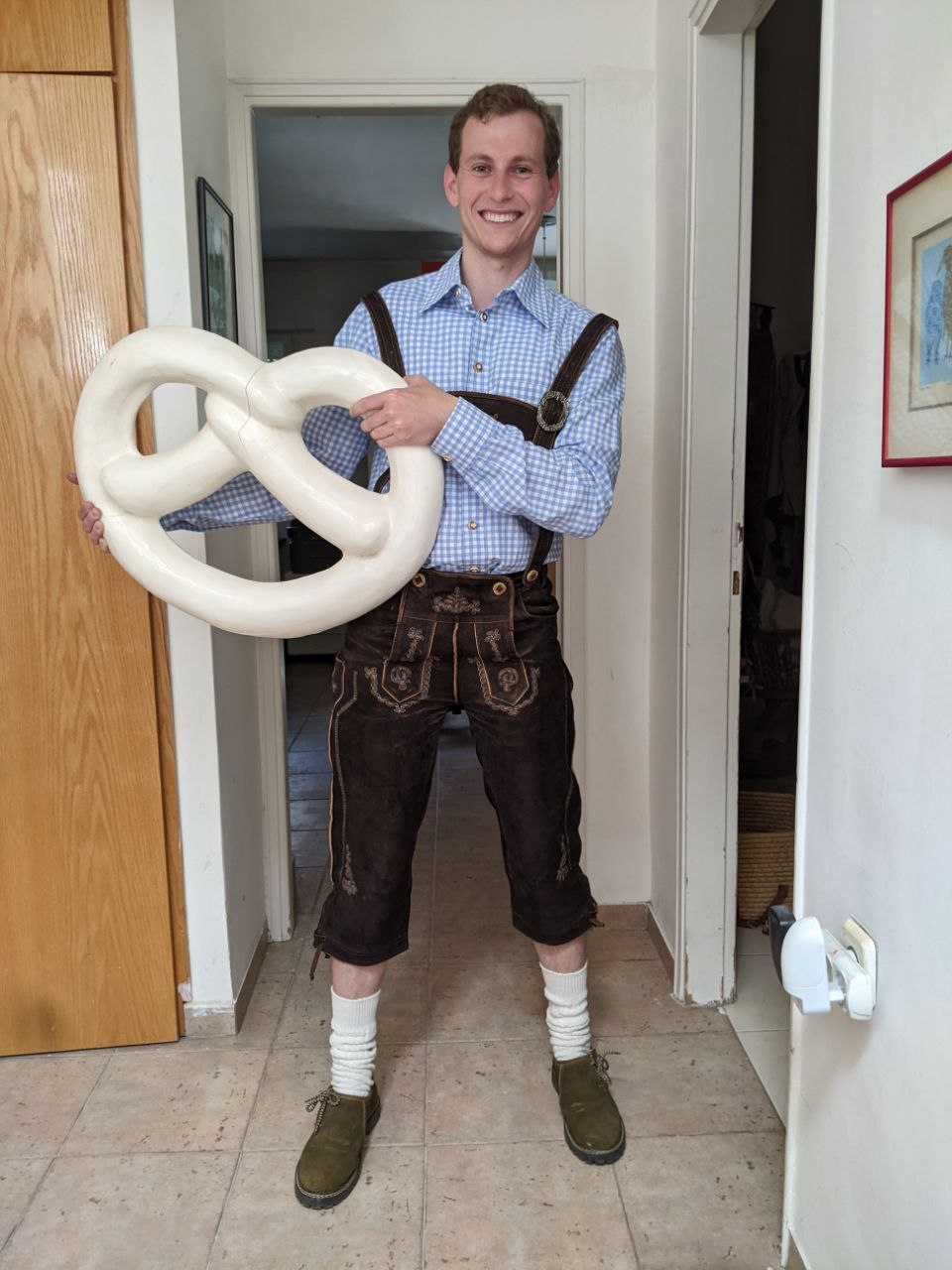
Lederhosen from Munich -
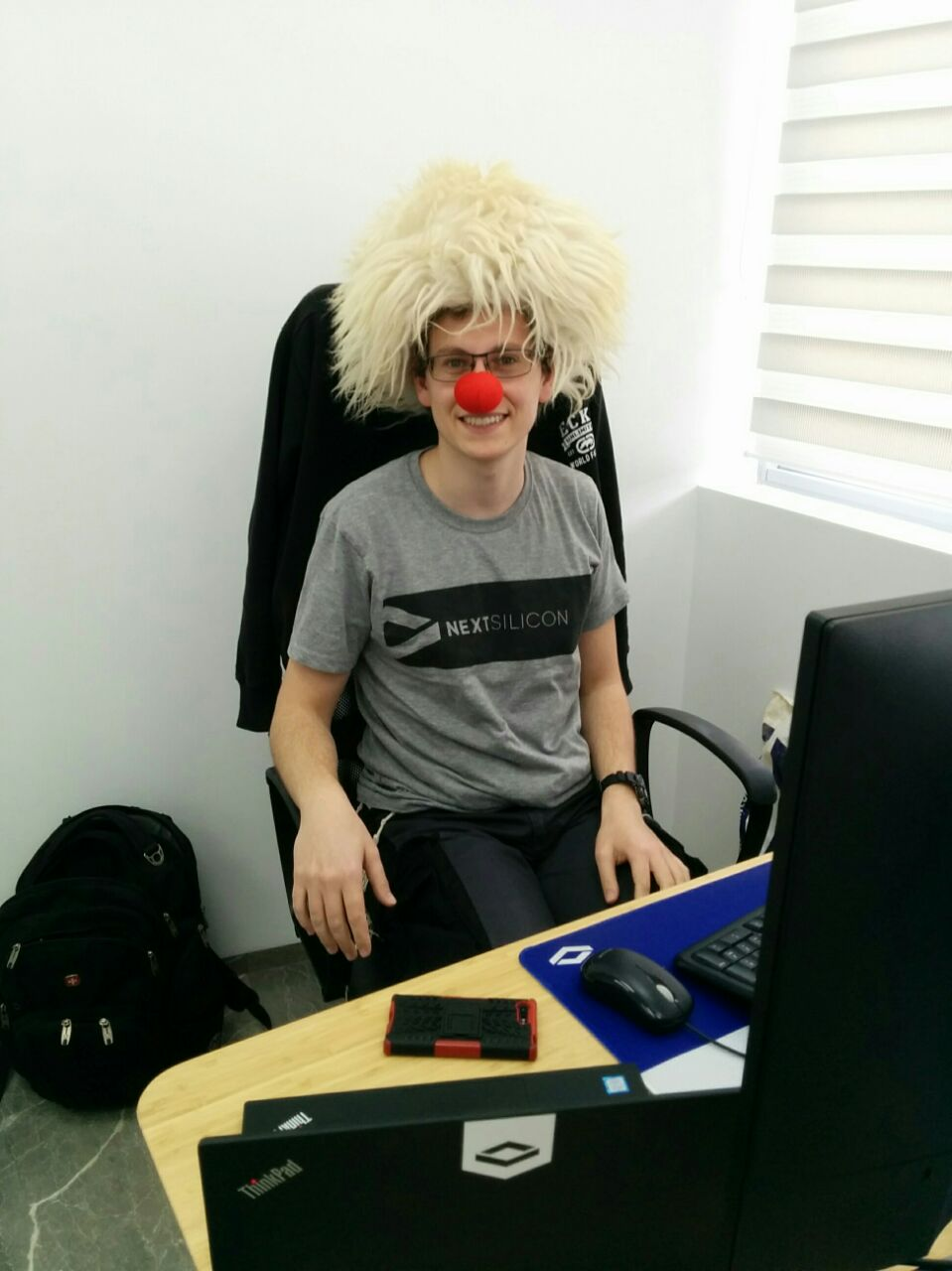
Papakhas from Georgia -
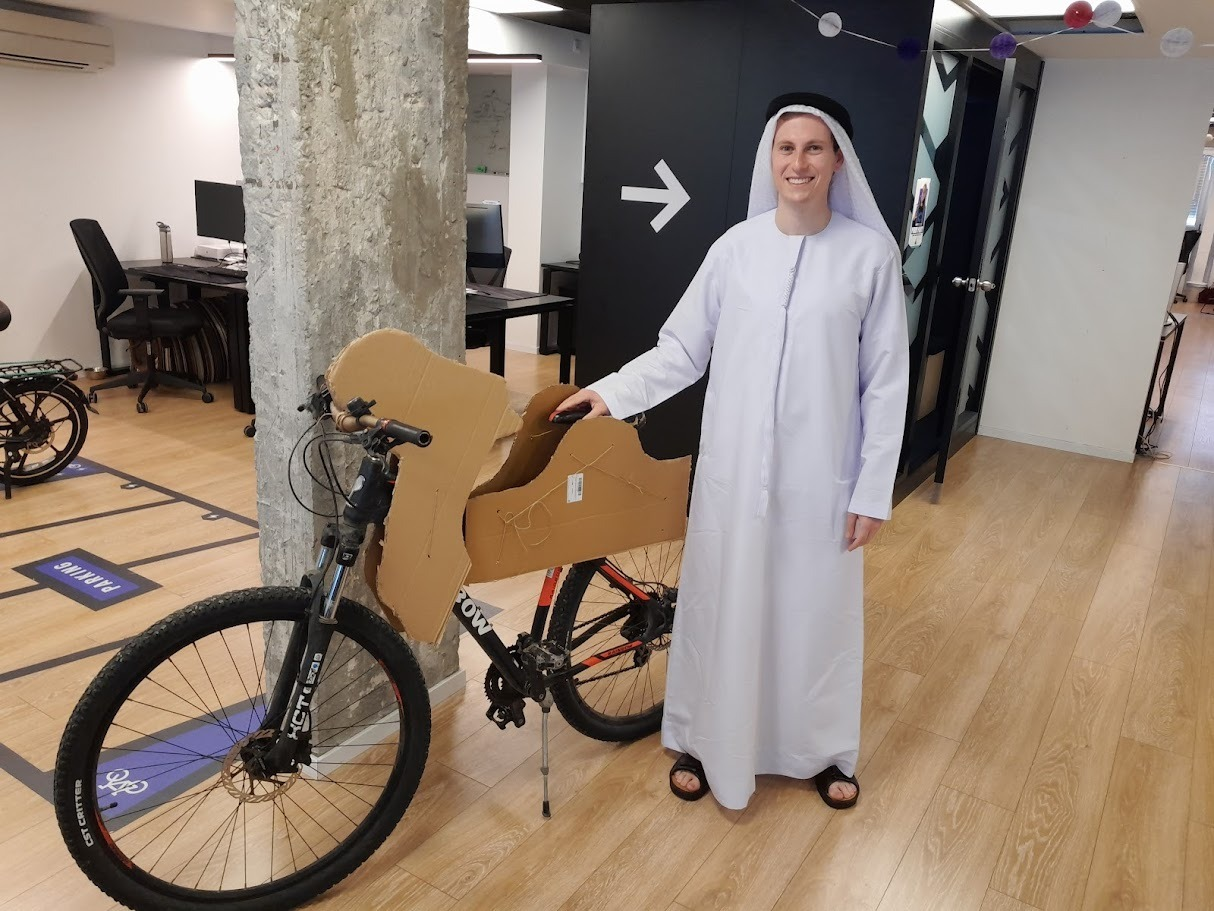
Kandura from Dubai (with my bike as a camel)
Some places are boring, and don’t have interesting clothing for me to get. But Scotland has the kilt.
Selecting the Tartan
Historically (but not as historic as Braveheart), the Scottish highlands were full of clans. To differentiate and identify them, each clan had their own pattern for their kilt. That pattern is called Tartan.
Today, clan association is popular, especially among Americans with Scottish heritage. To manage all of the designs, and keep exclusivity for clan members, there is a central registry for all of the designs. If you want to order fabric from a Tartan fabric maker, and the Tartan is associated with a clan, you have to prove that you are associated with the clan. However, if you are not associated with any clan, there are many generic styles you can use. In fact, there are over 7,000 registered Tartans.
I heard that there was a Jewish Tartan, so I thought that that would be an appropriate one for me. Looking into to, I saw that originally a member of the Glasgow Jewish community designed on in 2008, but that never got too popular. Later in 2016 the Chabad of Giffnock (near Glasgow) designed another one and started selling them (maily to Jewish tourists).
Kilts are relatively easy to make. You need a long rectangle of fabric, and then you sow it into a kilt. In order to make a custom Tartan, you have to order a minimum amount of fabric from a Tartan factory, and then send it to a taylor to be sewn to your size. Since most people don’t buy the Jewish Tartan, each production is a custom order. The Chabad ordered a whole bunch, and sells them to interested tourists. However, since they are custom printed, they cost a lot more than more generic patters.
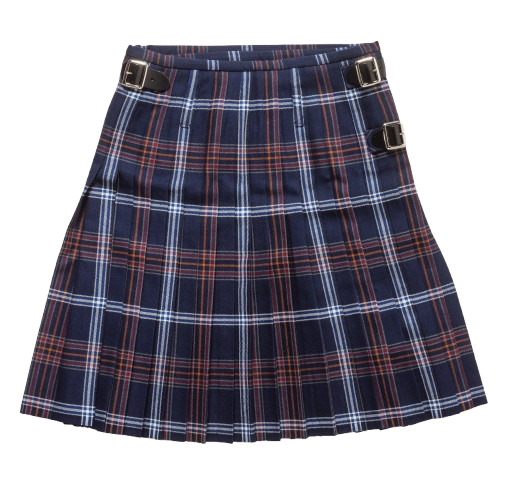
Since Kilts in general are expensive, I tried to see if I could find a cheaper option. After reviewing common Tartan designs, I found the Scottish soccer team, the Rangers.
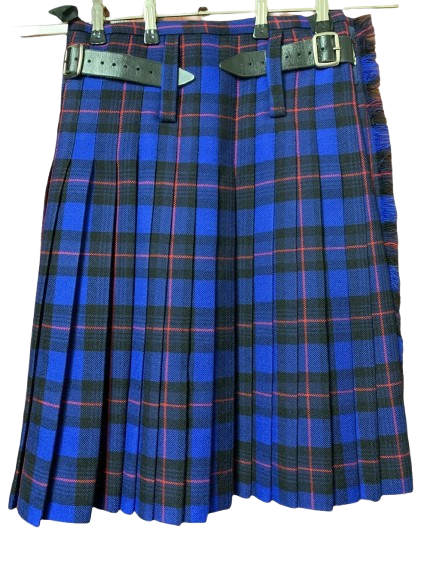
It looked close enough, so I decided to get that.
To further lower the cost, I found a place that sells used kilts. As many people know, Kilts are typically worn “full Scot”. Thankfully, the companies selling used kilts address that issue by removing all of the stitches in the kilt, to get a long rectangle. Then they thoroughly dry-clean the fabric, before re-sowing it to match the customer’s custom measurements. In addition to providing a kilt, they provide the entire outfit as a package deal. So I ordered that. The person biking with me for this trip is a profession physical therapist, so I used his assistance to properly measure me.
Mailing address
My goal was to have my kilt wait for me at someone’s house in Scotland at the start of my trip. I could then measure the size and if there was an issue, I would have a week to exchange it for a better size. Through an Israeli friend, I found someone who could be used as a mailing address, where I could store my kilt until I arrived to pick it up. Also, I would be able to store everything that I don’t want to take on the bike trip there. Such as my bike suitcase, Shabbat clothing, and souvenirs I bought up until then.