Germany – The Travel Westward
Tag der offenen Tür
In Germany, once a year, governmental buildings are opened to the public. This was historically done in order to proudly display that Germany has an open government. You don’t get to rifle through the papers of the ministers, so I’m not sure exactly how the open house helps, but it is fun to see the offices anyway.
The date for Berlin (and the federal government) was August 20 and 21. The 20th was on Shabbat, but since I was staying close enough to many of the offices, I was able to walk to the ones and visit them. I went with my host in Germany, and we visited the Finance Ministry and the Foreign Ministry. Everything was in German, since it wasn’t an event were they expected many foreigners to be interested in attending. Although, my German was good enough to understand a lot of what was being shown.
At the ministries, the workers showed what their ministry does and how they work. We got to see a few of the offices and conference halls, and they had related activities for kids and adults. During our tour, some government worker even offered my friend a job.
The next day, Sunday, we were able to travel further, so we went to the ministry of science and the ministry of transportation. At the ministry of science a big point was made about how they are working on financing research into green energy, quantum computers, and medical development. There I was offered a job. I guess another important goal of the open house is to find potential candidates.
At the ministry of transportation we saw many different types of vehicles, and many of them we were even allowed to go on.
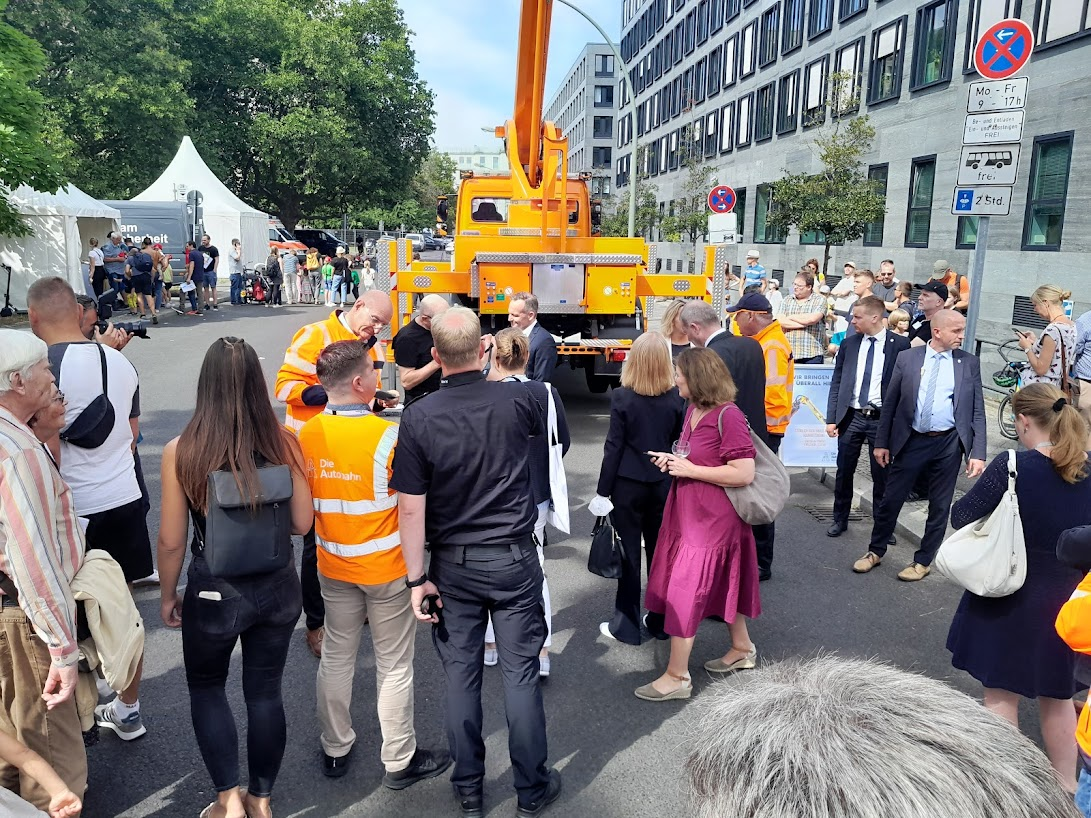
I made sure to find the minister of transportation, and the CEO of the ministry and I thanked them both for the 9 EUR ticket. They didn’t seem to interested in talking to me, but rather to more important people, like reporters, other politicians, and citizens. But at least I tried.
Monday – 9 EUR Ticket to Travel Westwards
I don’t remember the exact route, but since we were limited to the 9 EUR ticket, we could only use regional trains. The route was something like Berlin – Magdeburg – Sangerhausen – Kassel – Frankfurt – Mainz, travel by bike though ShUM cities (more on that later), and bike to Kehl. From there we would cross the Rhine with our bike (using a bridge) to Strasbourg, rent a car (for £1 plus fees) to Lyon, and meetup with ecotopia.
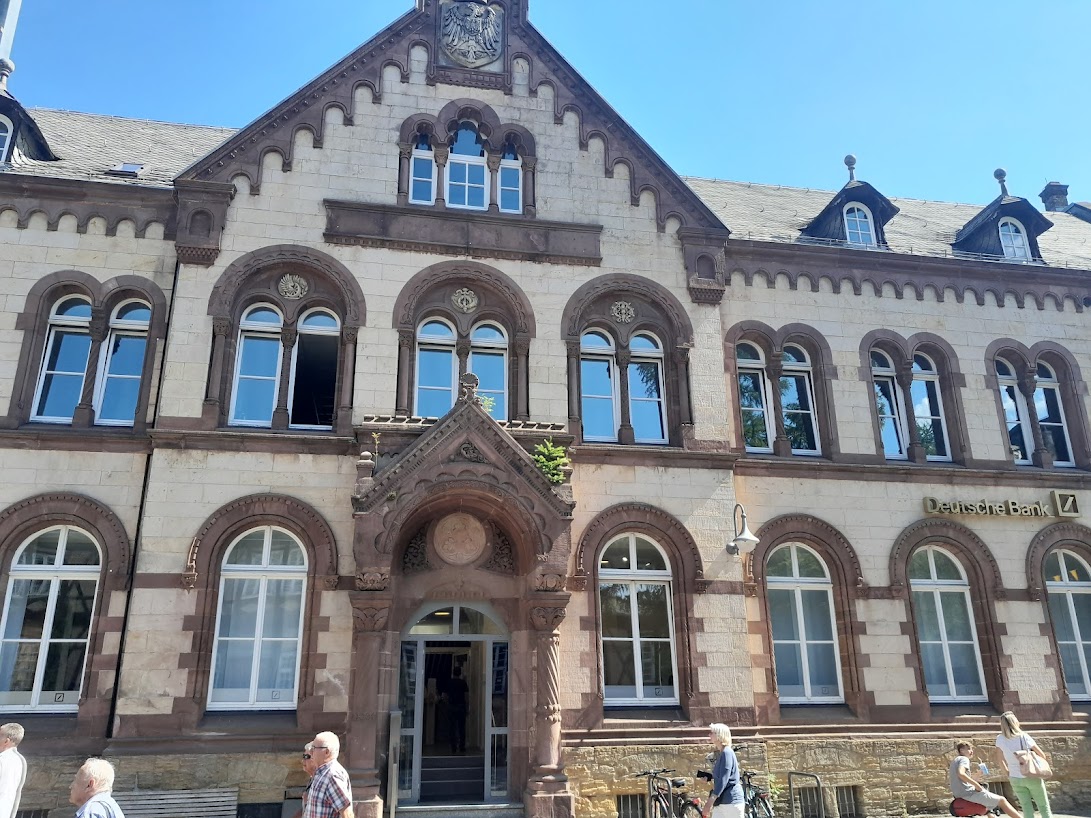
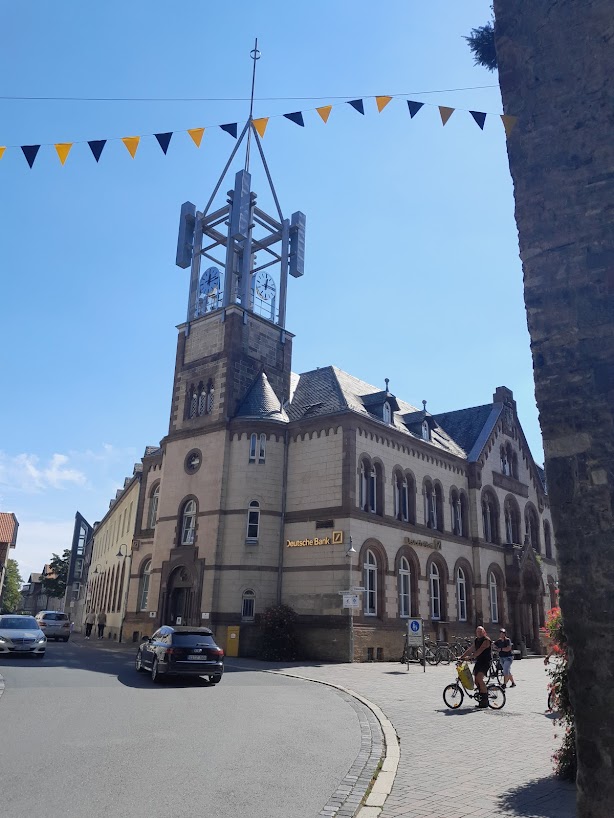
However, at some point we missed a connection, so the route was modified a bit. Luckily, there were trains going our general direction all the time. Some of the transfers were about 30 minutes, so I had just enough to quickly see small German towns and do Geocaches. On the way I saw a nice looking bank in the town of Goslar.
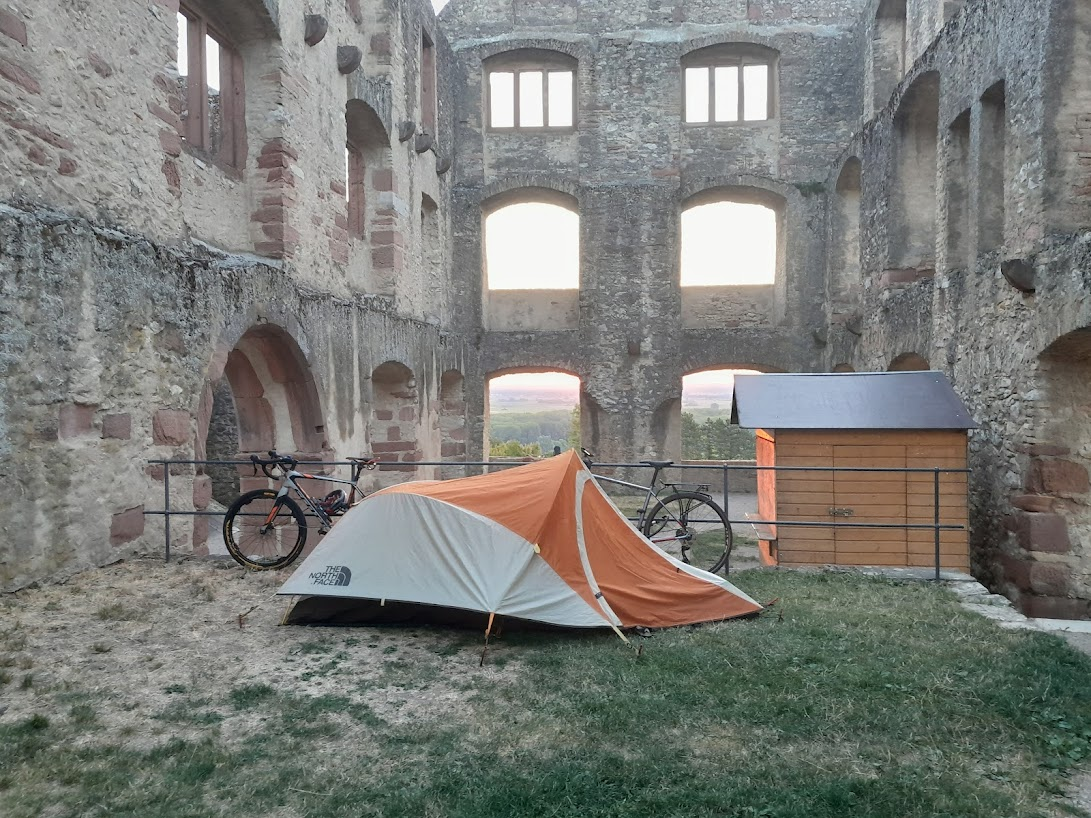
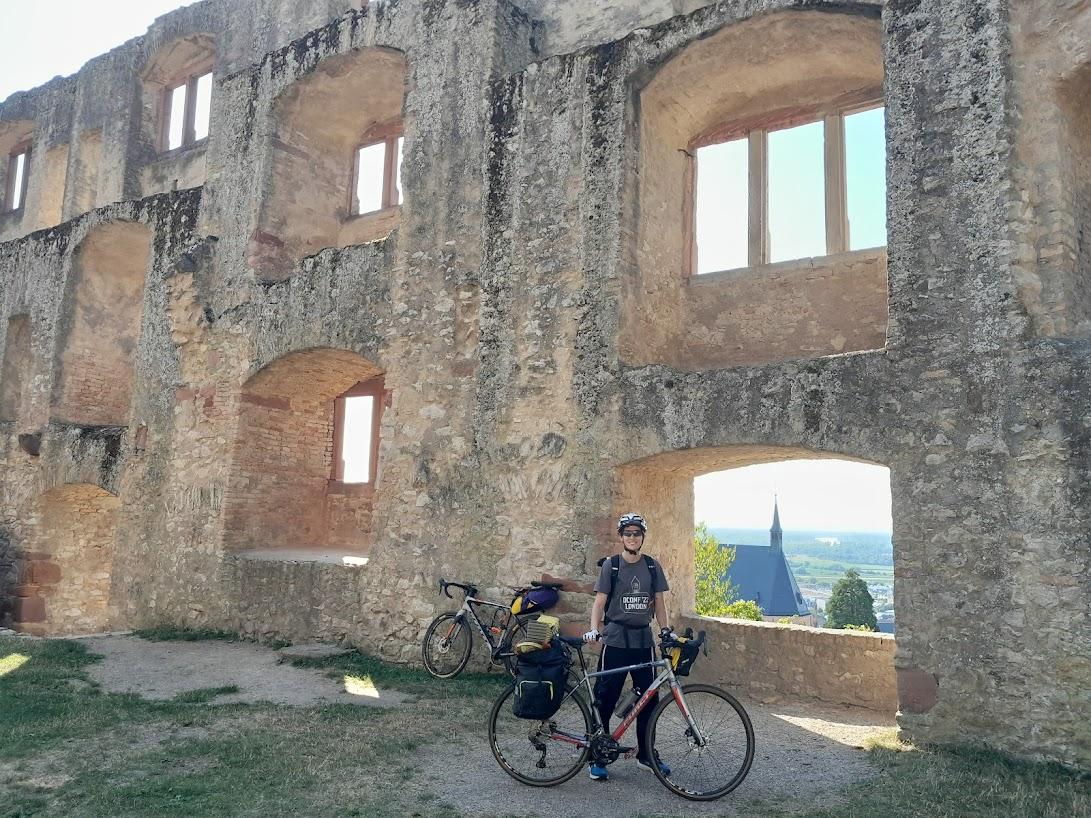
Eventually we make it to Mainz. There we saw the famous upside-down fountain, statues in honor Gutenberg’s printing press, and many Jewish sites. Afterwards I found out that this day in 1349, the residence of Mainz massacred around 6000 Jews, blaming them for the Black Death. We then biked along the Rhine looking for a nice place to camp. We found ruins of a castle in Oppenheim and slept there.
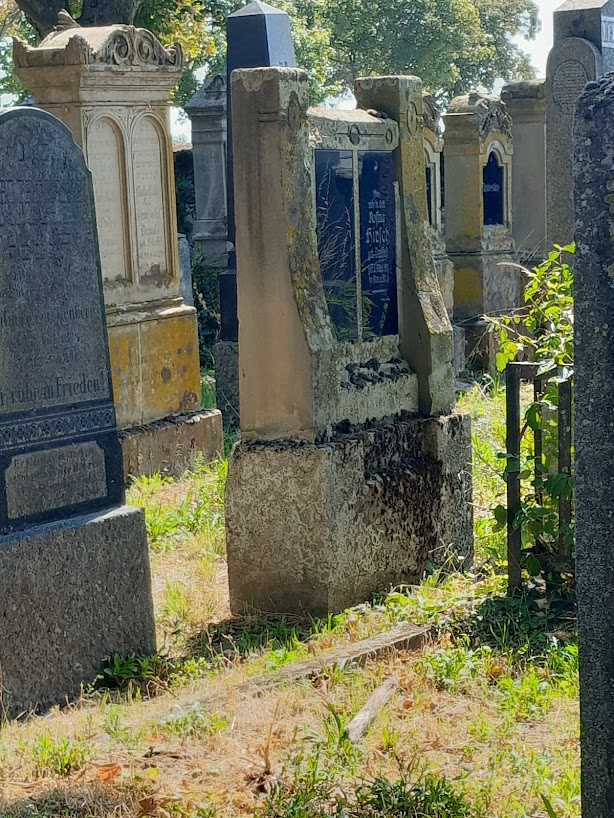
In the morning, while my friend slept, I toured the city. There was a nice looking old city, with half timbered houses an Ossuary full of human skeletons and at some point I saw a sign to an old Jewish cemetery. The cemetery was locked, so I didn’t get a good view, but I guess there was a Jewish community there from before the Holocaust.
ShUM-Sites
There are 3 cities in Germany named ShUM-Sites, they are Speyer, Worms and Mainz. Those cities were the locations of the first Jews in Germany. The earliest records are from the year 900, but by then the cities had large Jewish presents, so Jews must have formed communities much earlier. One of the theories is that Romans took Jewish slaves with them from Jerusalem to settle Germania. When the Roman empire fell, and the Jews were no longer slaves, they settled there.
Many of what we consider pillars of Judaism happened there. Such as Rabbi Gershom, and the prohibition against Polygamy, Rashi and his commentary, a larger push towards Chalitzah over Yibbum, the prohibition against Kitniyot on Passover and basically every Ashkenazic tradition. The community suffered many times throughout history, notably during the crusades, the black plague, and of course, the Holocaust.
Today there are very small communities there, mainly consisting of former Soviet Jews who were welcomed to Germany after the fall of the Soviet Union. However, the cities are proud of their Jewish heritage and made a big effort to restore and display the history. So much work was done that they even got on the UNESCO World Heritage Sites (around the same time UNESCO decelerated the Temple Mount as a Muslim heritage site). They developed a website, app, videos, papers and museums with a large amount of information.
Tuesday – Touring ShUM
Ride to Worms
Even though we had the 9 EUR ticket, there was a fire on the train tracks, so we simply rode our bikes towards Worms. The ride was a nice and shady one, however every once in a while we saw a concentration camp or abandon Jewish cemetery.
Worms
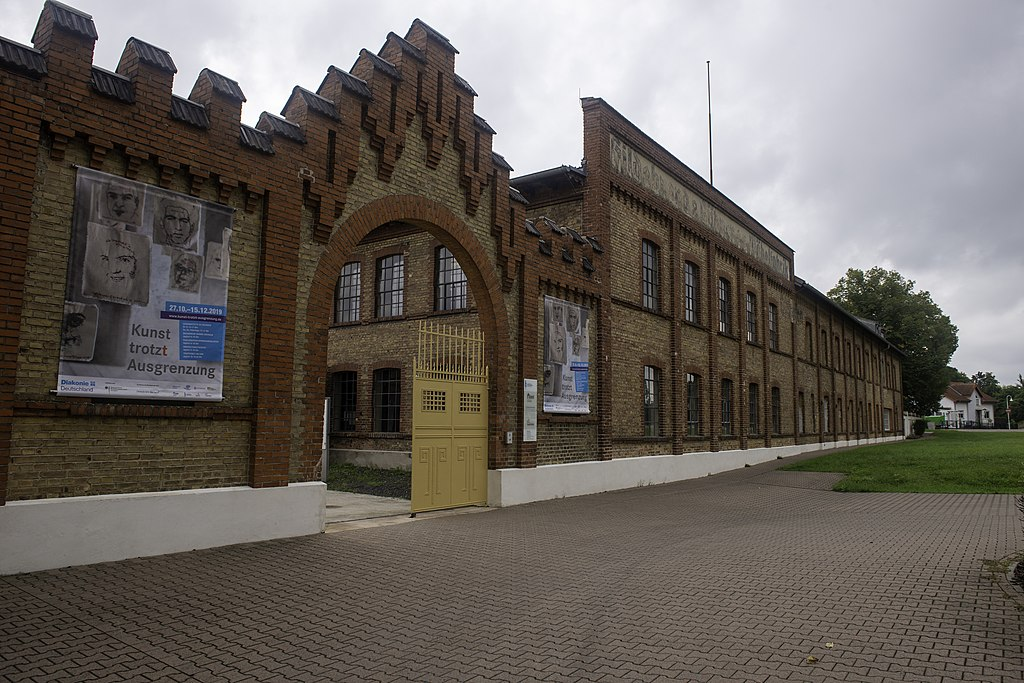
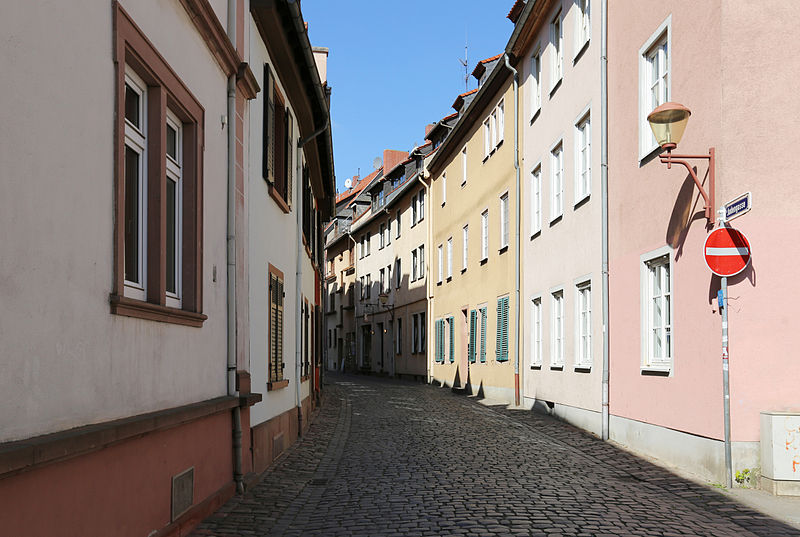
Eventually we made it to Worms in time for lunch. I opted out of a Diet of Worms and simply had a sandwich. We followed the signs to the historic Jewish area, and walked along Judengasse (Jewish alley) and saw many Stolpersteins. A Stolperstein (stumbling block) is a concrete cube bearing a brass plate inscribed with the name and life dates of victims of Nazi extermination or persecution. They are placed in front of the house where the Jew used to live. In the Jewish area it is common to see many.
There we saw Rashi’s Yeshiva. It is a historic synagogue, however Rashi never prayed there. Rashi lived there around 1100 but the synagogue destroyed and rebuilt after the crusades, a bit later. To honor the place, I learned Shnayim mikra ve-echad targum and my friend put on Rashi Tefilin.
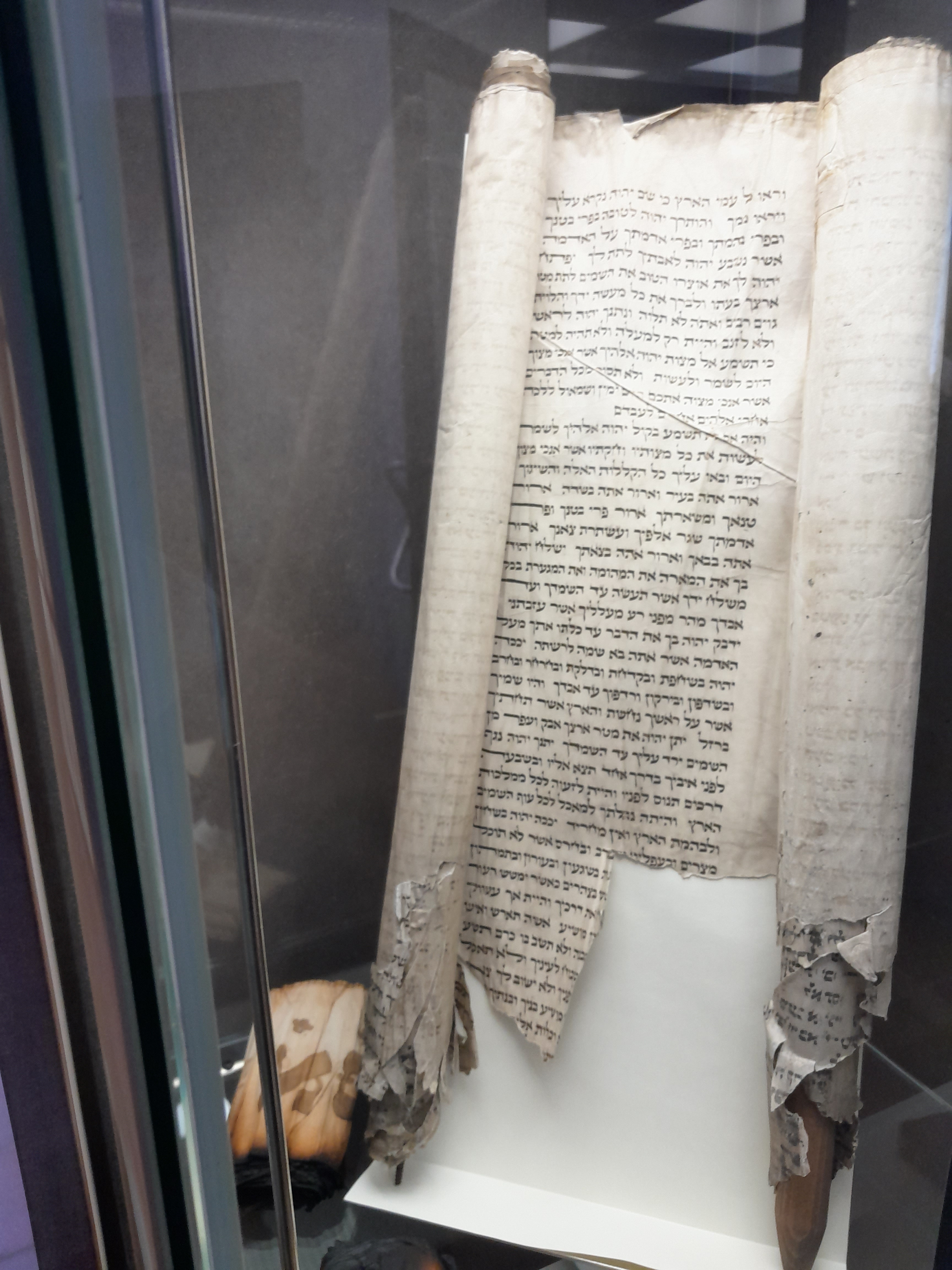
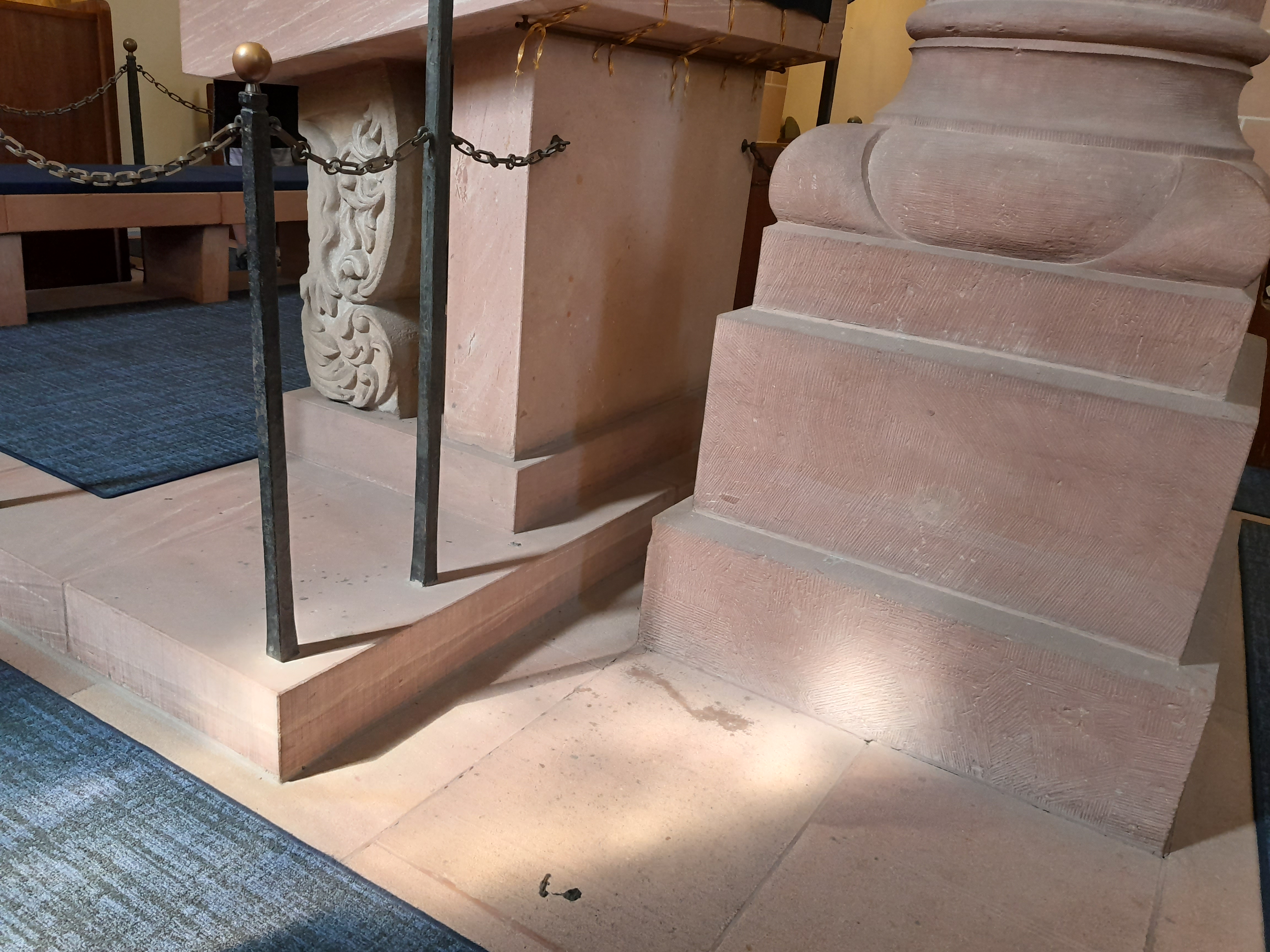
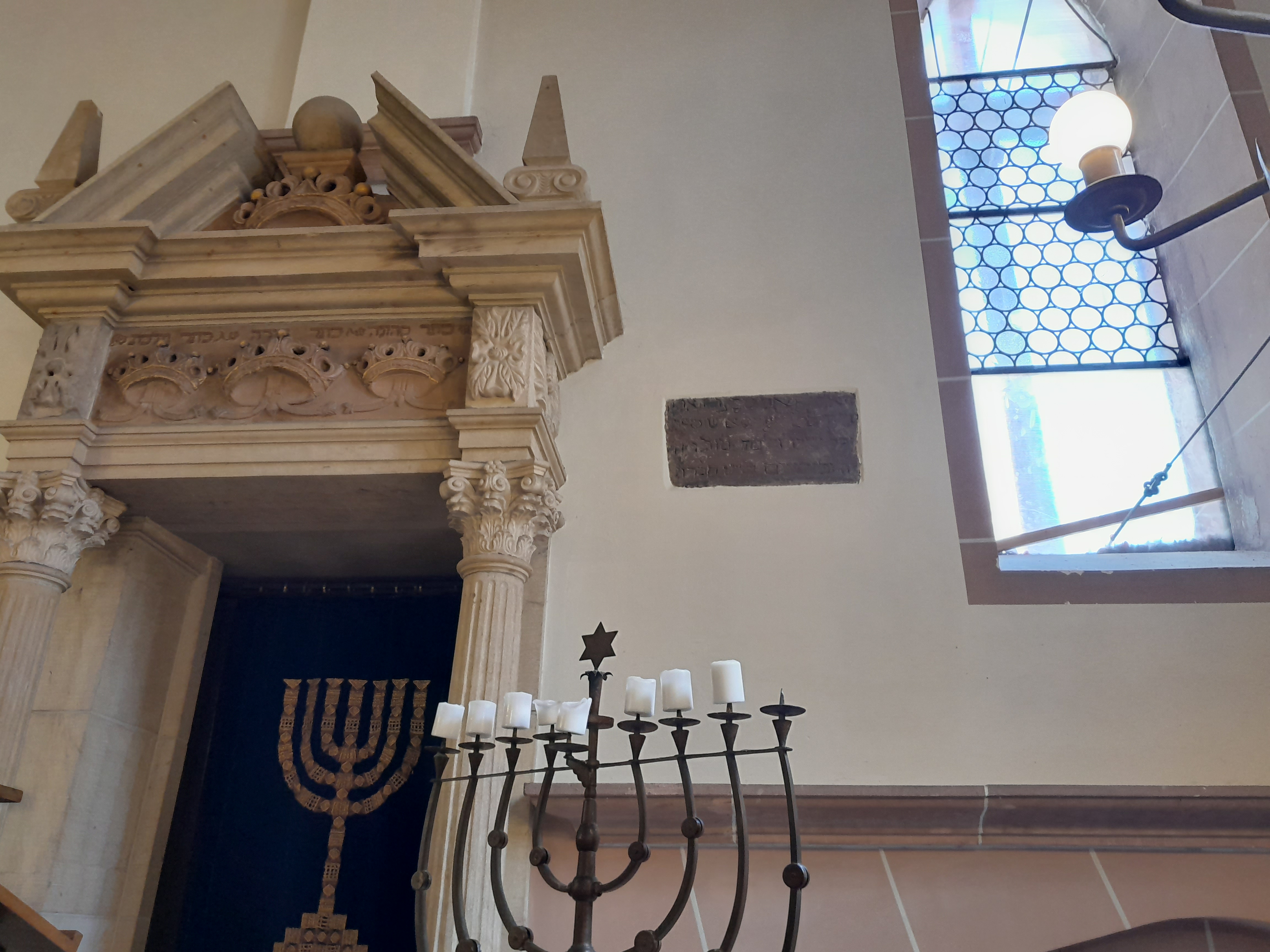
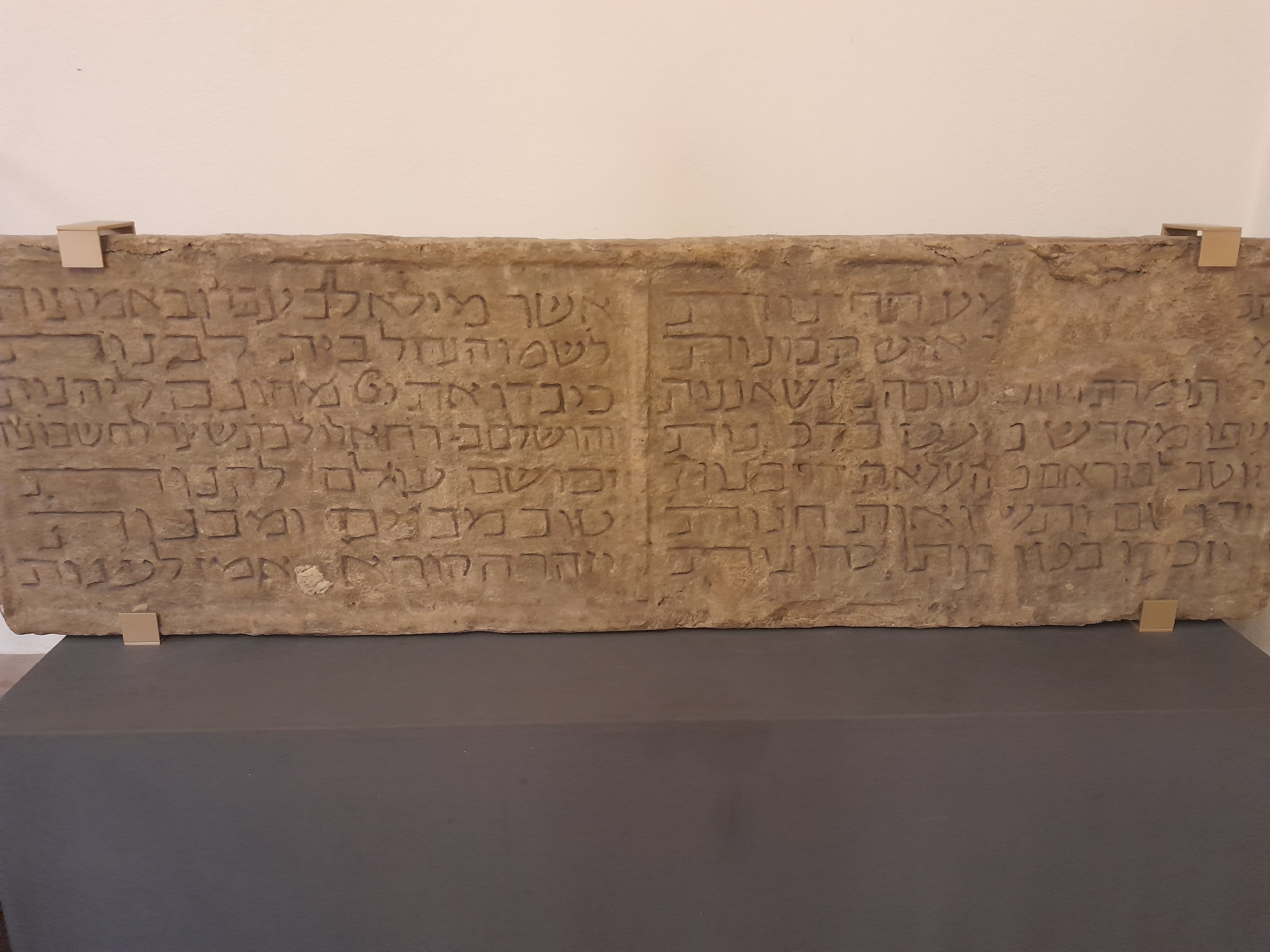
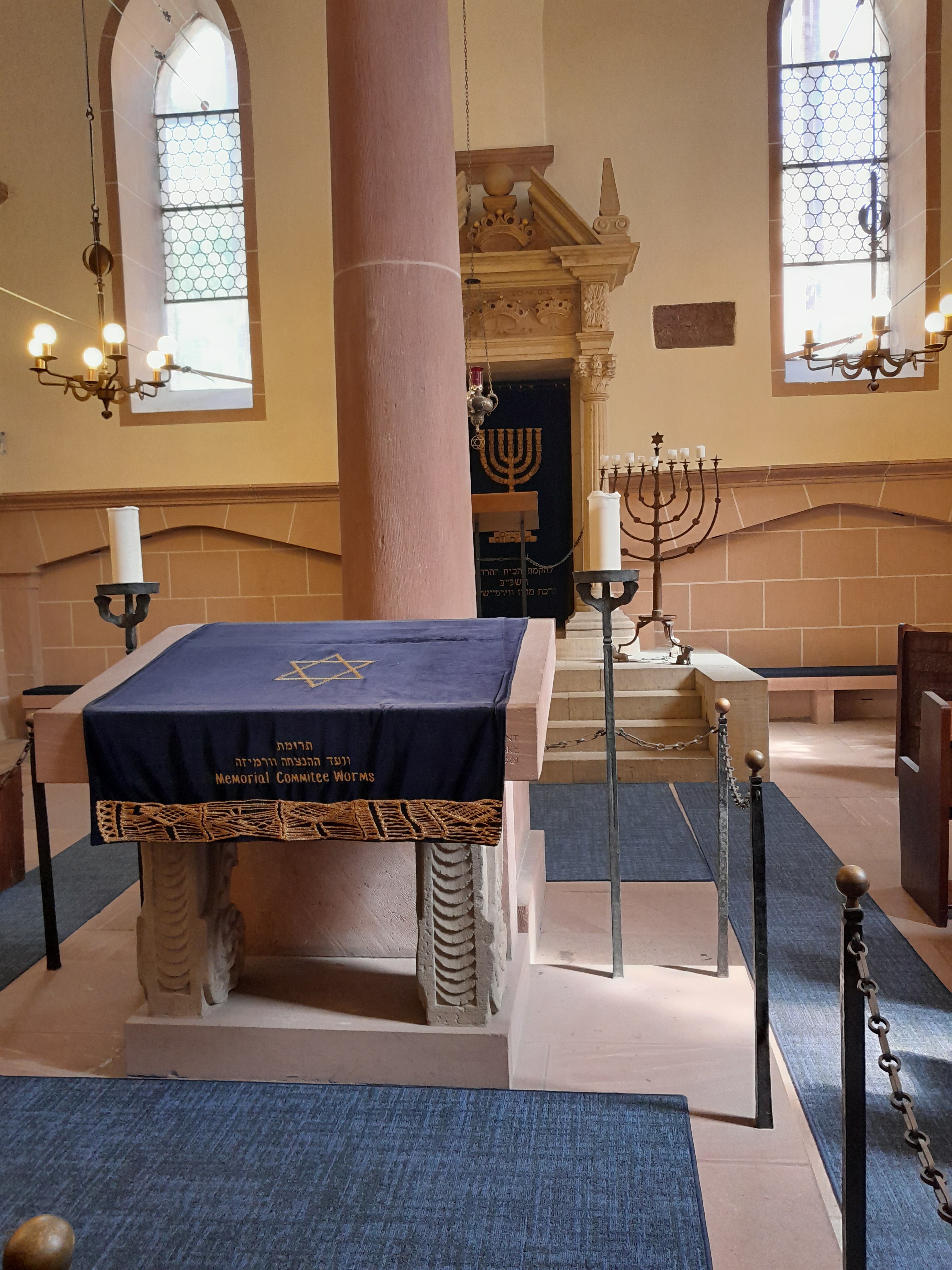
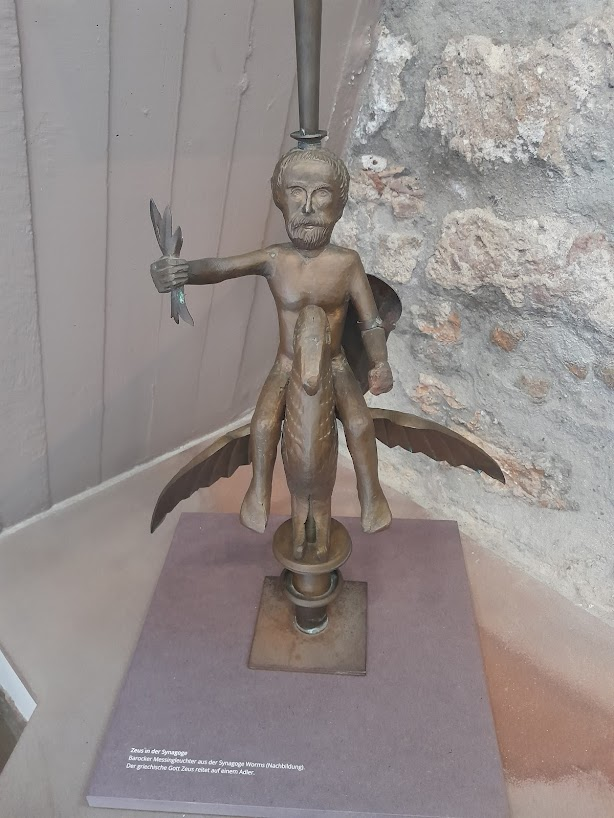
Oddly there was an ornament of Zeus that had been on display in the synagogue, I’m not sure why.
Speyer
We arrived a bit late to Speyer, so the museums were closed, but we got to see the sites from outside and read the information.
Ludwigshafen
On my way west, we had a transfer at Ludwigshafen. As per a popular vote, and confirmed by the city, Ludwigshafen is Germany’s ugliest city. For the long explanation why, you can watch this https://www.youtube.com/watch?v=23hsMyt–38. In short, look at this picture:
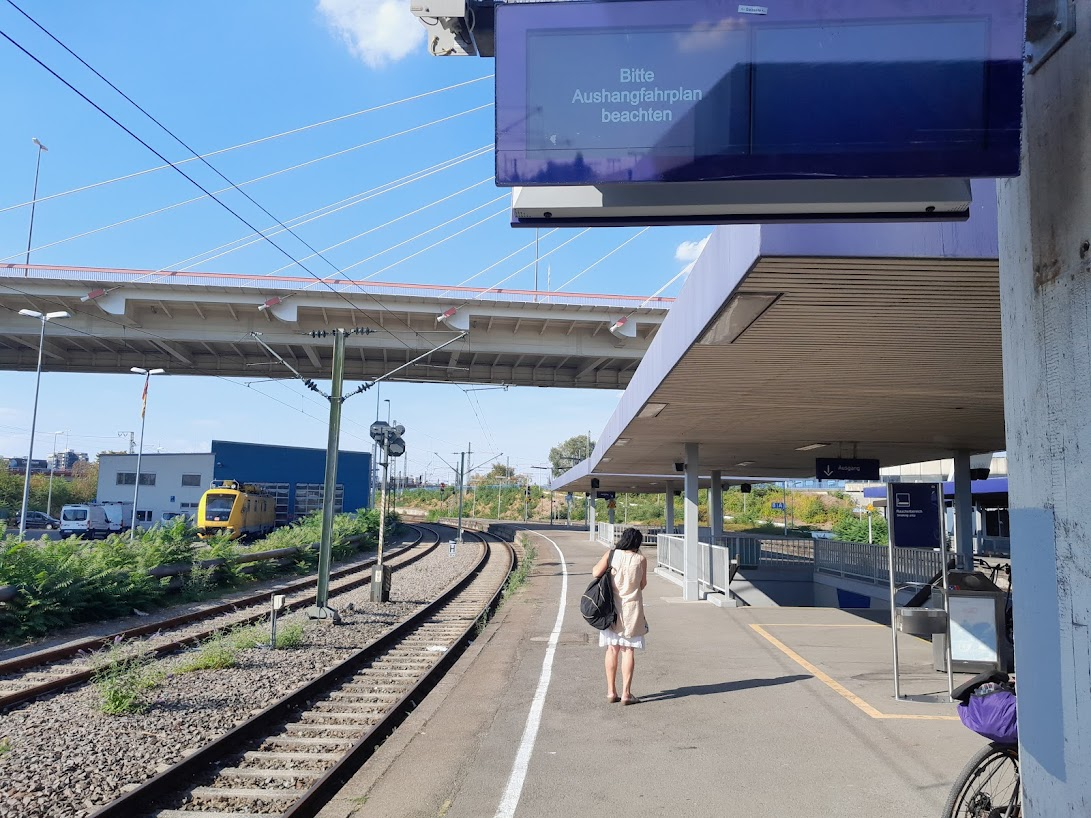
You can see a smoking zone in yellow next to the stair entrance and exit, rather than to the side. There are only stairs, no ramps, elevators or escalators. There are bridges of cars, all stuck in traffic due to the poor planning. The train time board doesn’t work. And there are many more reasons for it to win its title. I don’t plan on going there again, but at least I can see what the worst that Germany has to offer (compared to other countries that I’ve been to, it’s not that bad).
Finding a Camping Spot
As the night was approaching, we were trying to get as close as possible to Kehl, which is on the other side of the Rhine from Strasbourg. The goal was to camp at Kehl and bike over a bridge in the morning. However, the trains were having troubles that day. Trains were heavily delayed, if not outright cancelled. When the trains finally arrived, they were grossly over-packed with barely enough room to stand. In addition to that, on our way to Mannheim we heard that there was a toxic gas leak. You can image how it felt to be a Jew on a tightly packed train, on my way to poisonous gas.
Luckily we were able to get to Baden-Baden, so we set up our tent in the Black Forrest.
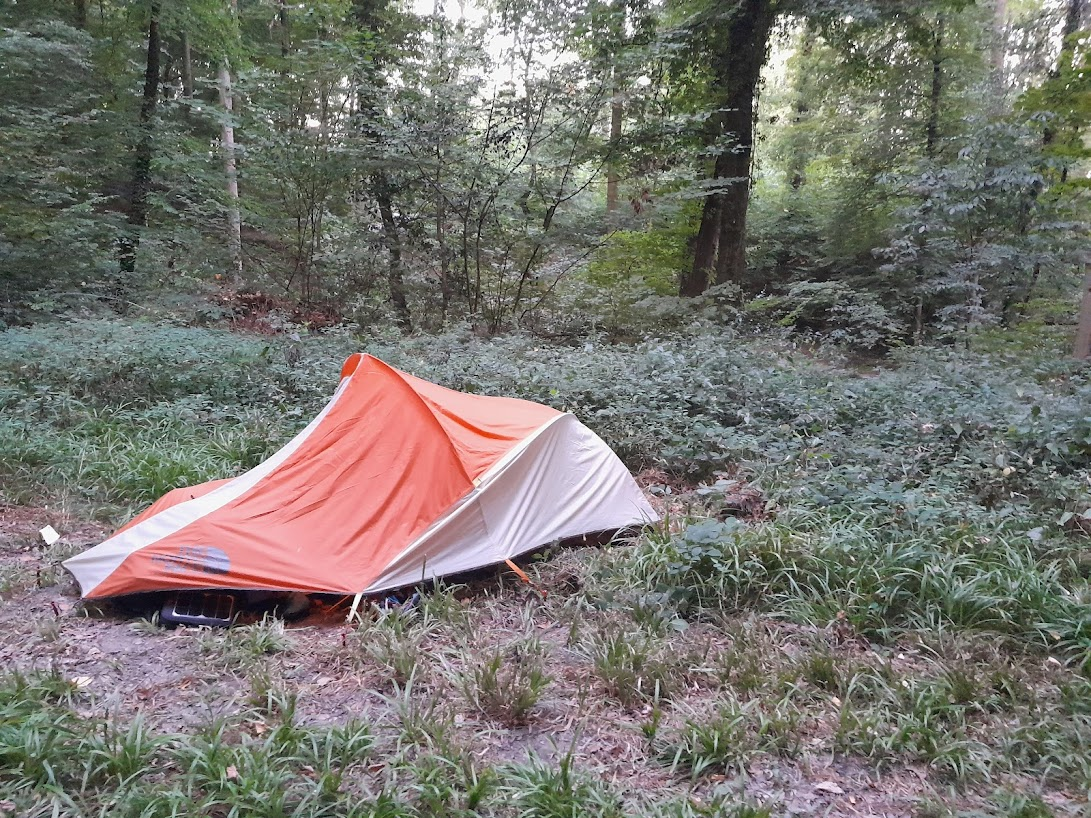
In the morning I took a walk around the black forest, and I can see what all the hype is about
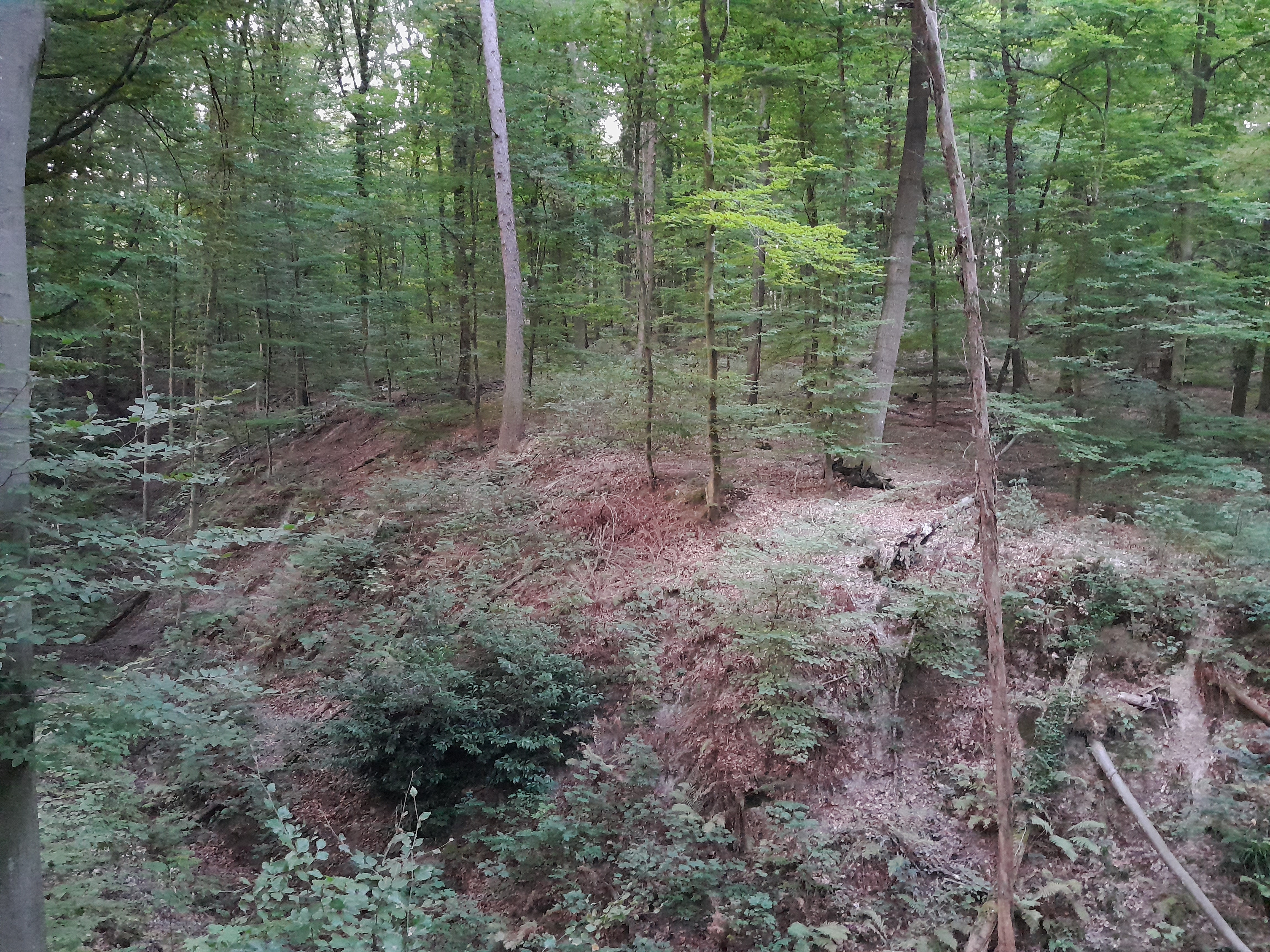
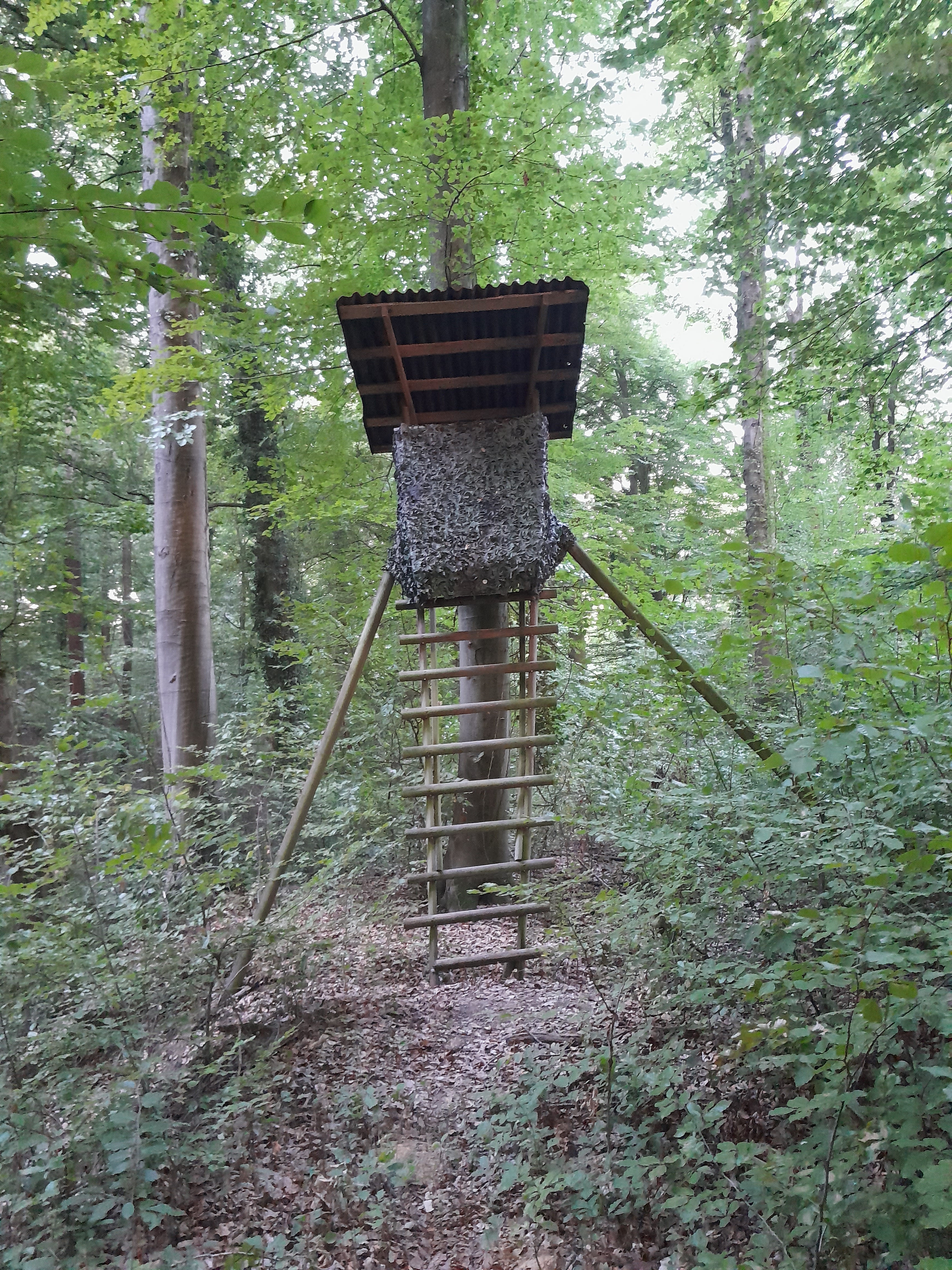
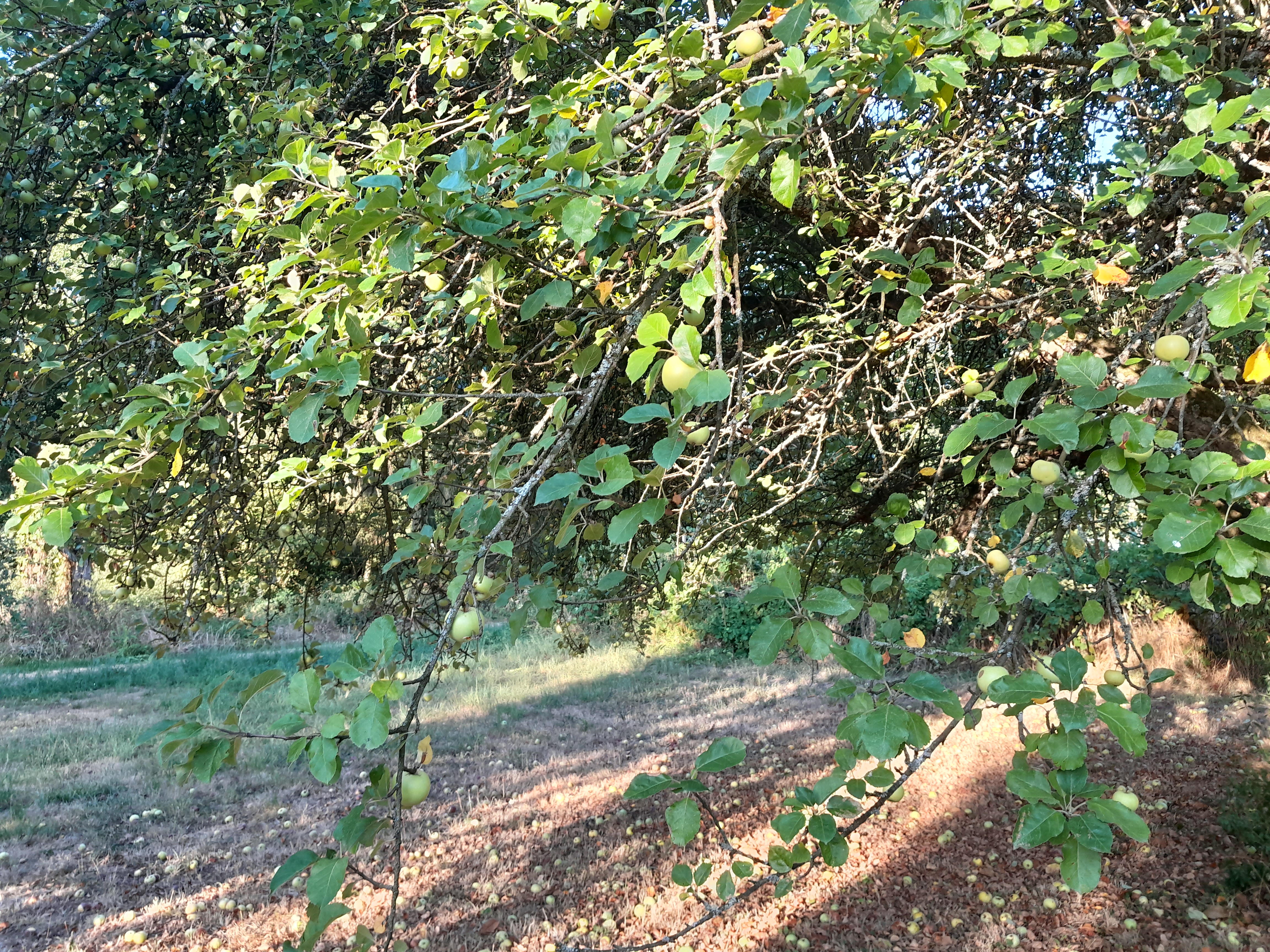
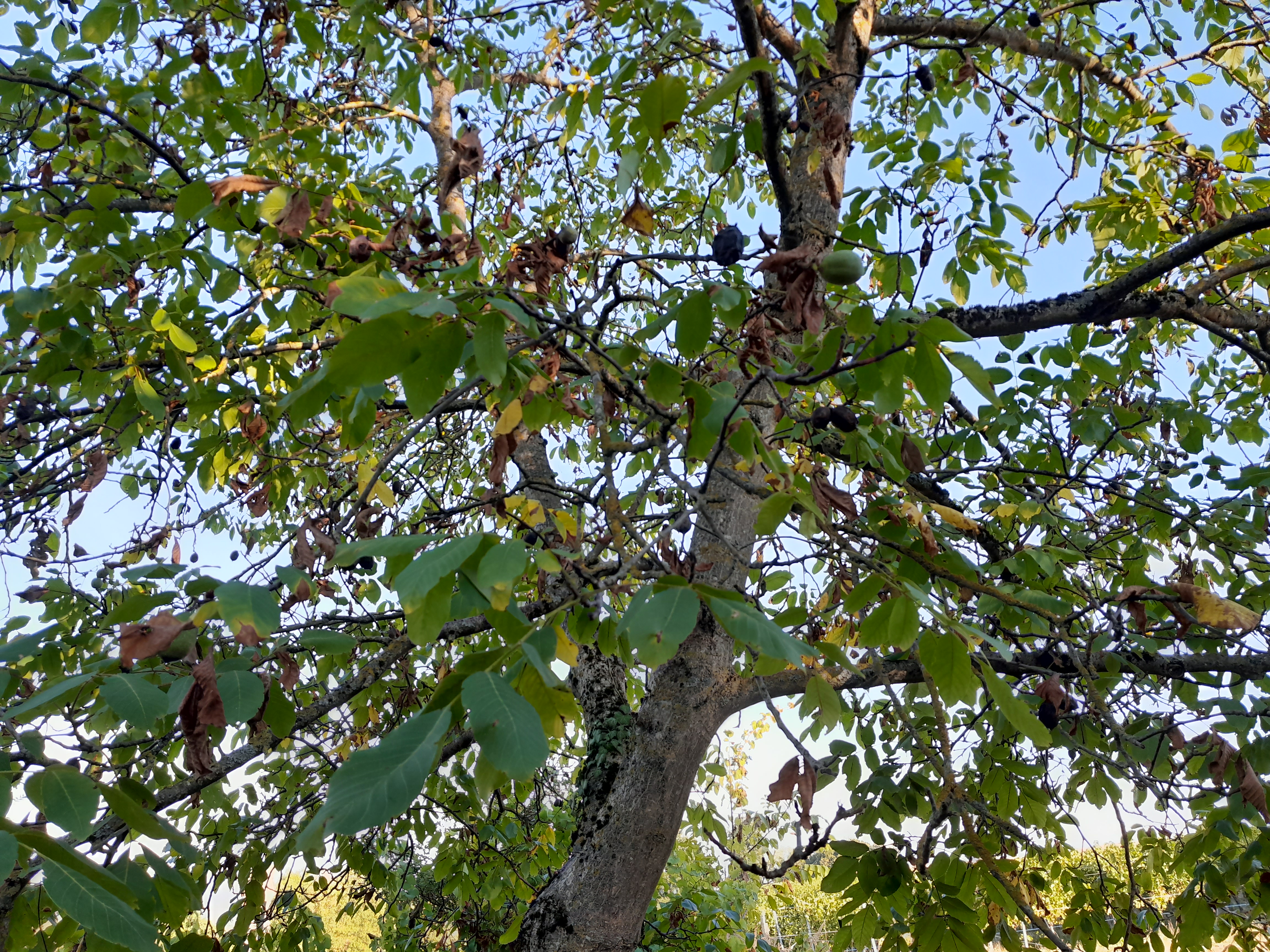
There were cows, grapes, apples, and many more produce. In Israel, since it is Shmita, I may have been able to eat some of the food, but in Germany I decided not to.
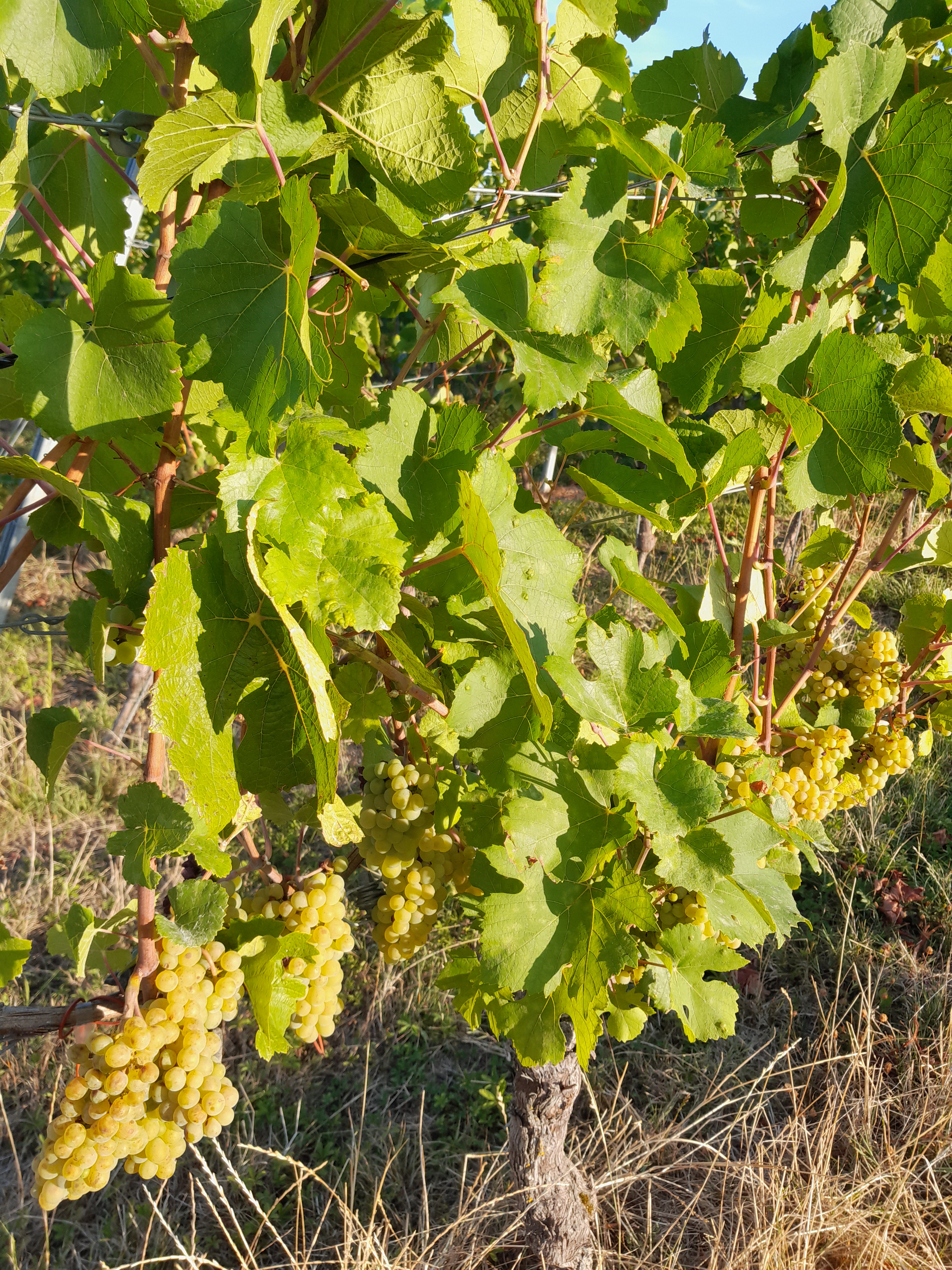
The trains still didn’t work properly, so from there we biked about 60km to Kehl. We then crossed the bridge and made it to Strasbourg. It always interested me how even though every EU citizen can live and work in other EU countries, the language gap near the boarders are sometimes very large. On the German side, people spoke German but couldn’t understand French, and the other way on the French side. In theory, I would have assumed that if a resident of one town was looking to move, they might try to find a place right across the boarder, but that is not the case there. I wanted to know exactly where the language switched, so on the bridge I said Bonjour to some people and guten Morgen to others, most of the people simply ignored me.
Strasbourg
The first thing we did was get our car rental. I found this site called https://www.driiveme.co.uk/ that offered such a rental for 1 GBP. I wasn’t quite sure that it would work, it sounded too good to be true, but it worked. Apparently many people fly to Lyon and drive to Strasbourg, so they need people to return the car.
Other than the fact that everyone was speaking French, the other big difference between France and Germany was that the French pedestrians don’t wait at red lights. They look both ways and then cross. In Germany, even if it is in the middle of the night, and there are no cars, German pedestrians will wait until the light is green.
In Strasbourg I saw something amazing, Jews walking around looking like Jews. In Germany almost all of the Jews walk around with hats, but in Strasbourg they were proudly wearing their Kippas. I tried to talk to one of them to ask them were I could find a Kosher restaurant, but I didn’t speak French. His English wasn’t that good, but eventually we realised that we could talk in Hebrew. Apparently it is common for the French Jews to know Hebrew at a level higher than their English.
One thing that I have always heard about France, was that Baguettes from bakeries are Kosher (but פת עכו”ם). So I went to the first bakery I saw and looked at all of the baked goods. Then I noticed some other baked goods, like cakes, and to the side I saw חלבי – Milchig. So I stumbled upon a kosher bakery. Since I was there I decide to get a Quiche. There were many flavours to choose from, but the seller didn’t speak English. However, words like onions and carrots are basically the same in French, so I was able to understand the French description.
As part of out sightseeing, we went to the city center and saw the Notre Dame (no not that Notre Dame, the one in Strasbourg). There I heard a street performer play a song that I recognised, it was from Les Misérables. So it was a good thing I listened to Les Misérables before going to France.
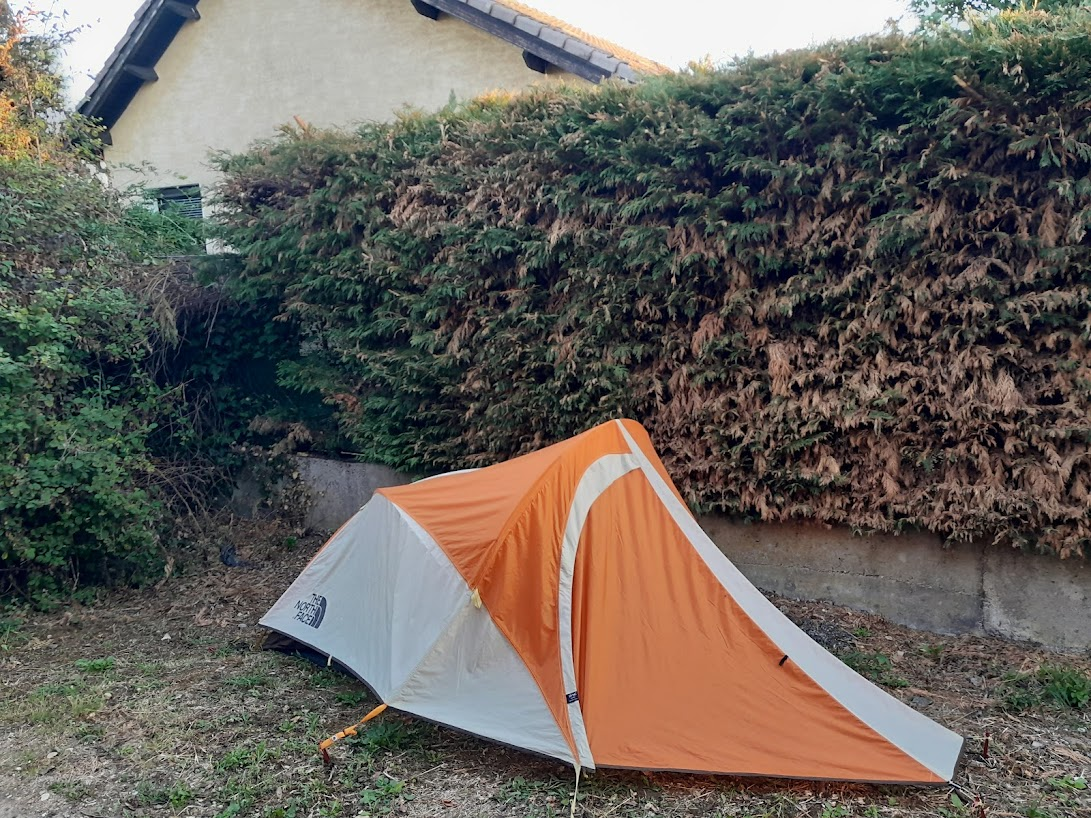
We then drove to Lyon. We got there really late, so we decided to camp out near the airport, where we had to return the car to in the morning. So we found a place that looked like someone’s backyard, and pitched our tents there.
Lyon
After returning the car we biked over to the Anarchist encampment, and I met a friend of mine from Israel, who introduced me to Ecotopia.
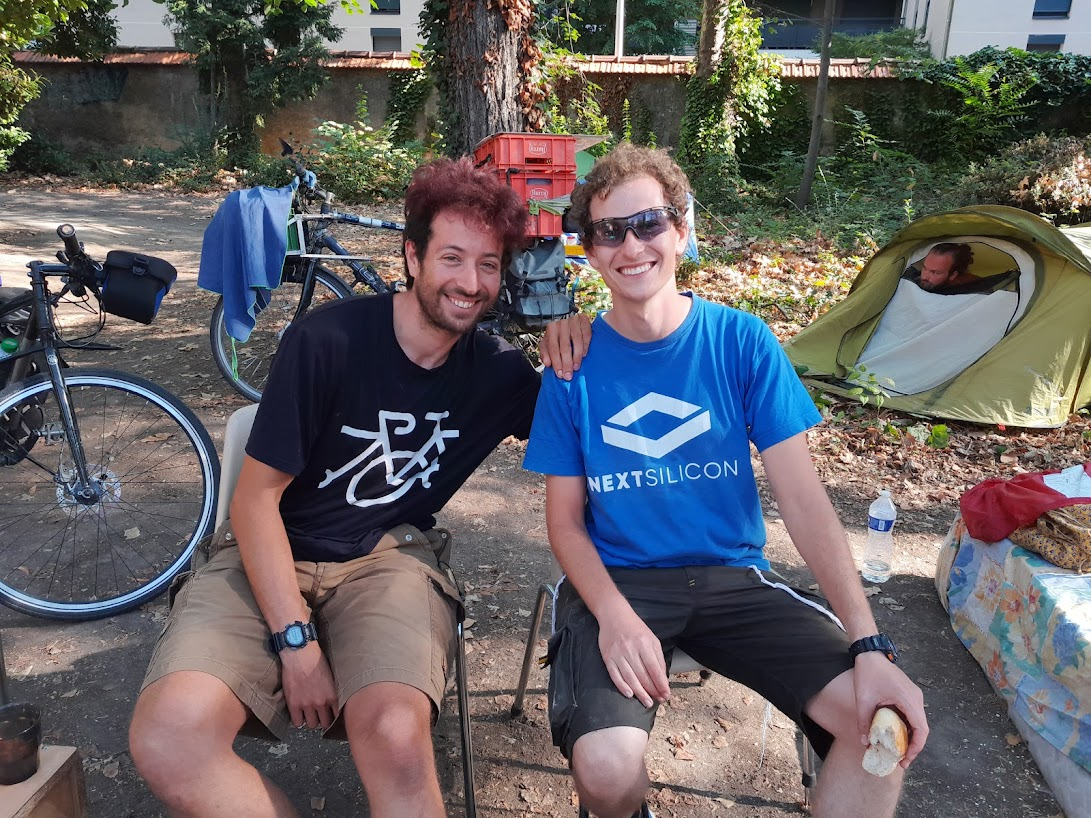
notice the guy in the tent, he looks surprised
Conclusion
A lot has happened with Ecotopia, but I don’t have that good access to internet or electricity, so I will have to update at a later time.